
(CW: Talks of exceedingly long wait times, transphobia, mental health – support links at the bottom of this page)

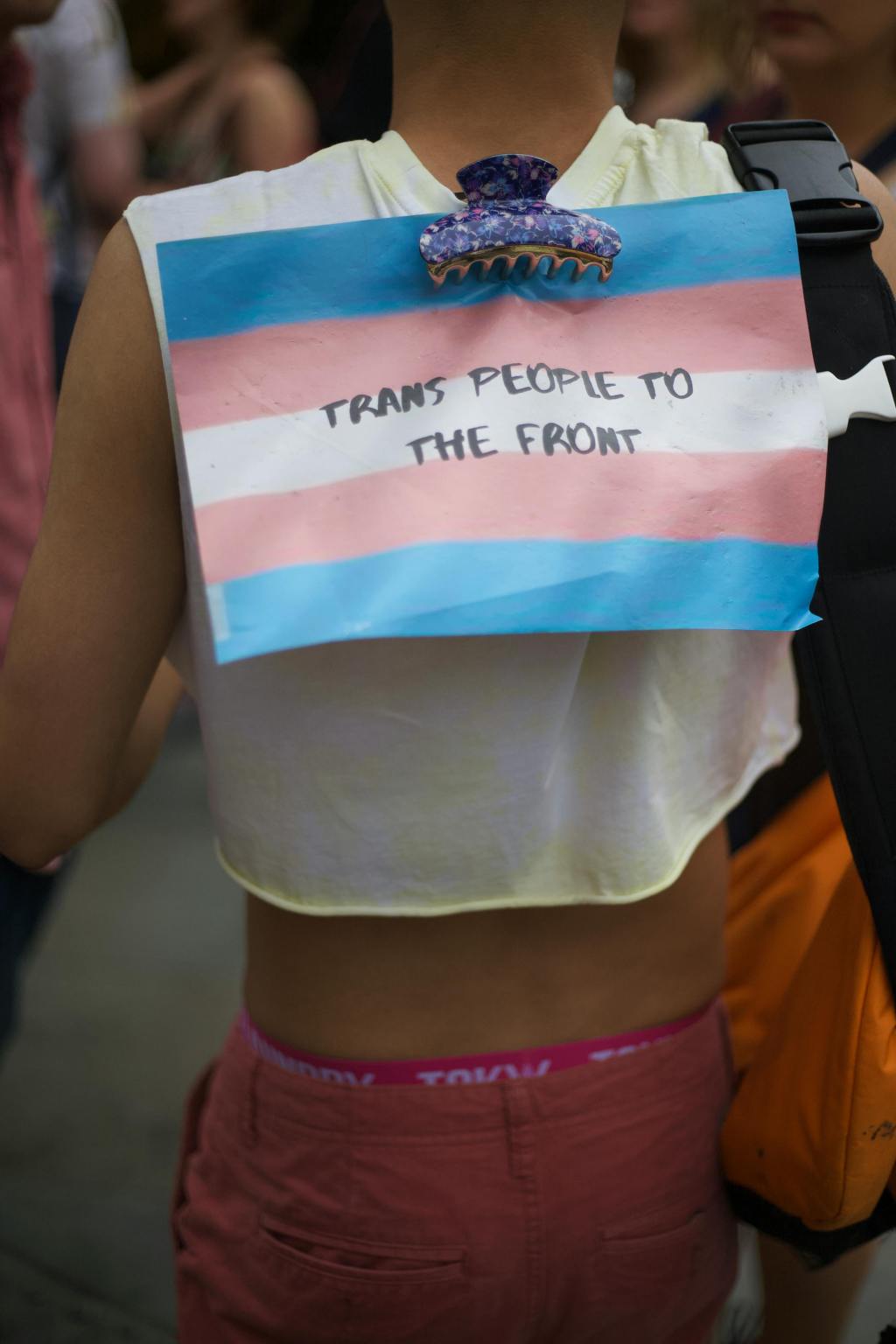
Trans people are not a phenomenon. According to the Office for National Statistics, in the 2021 census, a combined total of 96,000 people identify as either trans men (48,000 people) or trans women (48,000 people), while 30,000 people identify as non-binary. This equates to less than 1% of the UK population – 0.5% to be exact. This may even be an overestimation, according to some studies.
Let’s start with the basics
You may already be familiar with this terminology, but for those that aren’t, or need a refresher, let’s go over a few terms:
Transgender (trans): An umbrella term to describe a person whose gender identity differs from their assigned sex at birth.
Cisgender (cis): A term to describe a person whose gender identity aligns with their assigned sex at birth.
Non-binary – An umbrella term to describe someone whose gender identity falls outside the binary terms of male and female, or ‘man’ or ‘woman’. Some non-binary people consider themselves to be trans, and others do not.
Pronouns – Words we use instead of someone’s name when we are talking about them. Examples include: He/Him, She/Her, They/Them – If you don’t know what someone’s pronouns are, the best thing to do is just ask!
Common misconceptions
There many misconceptions out there regarding trans people. We’re going to go over some of the most common ones:
Trans people are confused
- Not true! We know who we are, and many of us have known for a long time, regardless of age. That being said, it is not always possible for someone to be able to explore their gender due to many factors including lack of resources/knowledge, transphobia, etc.
Trans people are ‘born in the wrong body’
- The term ‘born in the wrong body’ may resonate for some trans people, but for many, it’s a term they no longer use, or it simply isn’t how they feel.
- While there are many trans people who do have gender dysphoria, and go on to access treatment in the form of surgery and/or hormones, this doesn’t mean that they are ‘born in the wrong body’ or wanting to ‘fix’ it. There are also many trans people that don’t access hormones and/or surgery – this could be down to their personal journey, or due to other factors such as waiting times, cost, or health. It’s important to note that everyone’s journey is very different.
Trans people suffer from mental illness
- Being transgender is not a mental illness. In fact, in 2019 the World Health Organisation declassified ‘gender identity disorder’ (now called Gender Incongruence) as a mental health condition. Even for those who have gender dysphoria (which is not every trans person) – it’s not a mental health condition, but is in fact, a recognised medical condition. The distress it causes can lead to mental health conditions such as anxiety or depression – this is why access to gender-affirming care and services is so important.
Trans rights are under threat
You may already be aware of the current issues trans people in the UK face, but in case you aren’t aware:
- On 16th April 2025, the case For Women Scotland vs Scottish Ministers – The Supreme Court was asked to determine the meaning of ‘man’, ‘woman’ and ‘sex’ in the Equality Act. The ruling was that the definition of ‘sex’ should be confined to ‘biological sex’ only. The Supreme Court ruling also states that obtaining a Gender Recognition Certificate does not change your legal sex for Equality Act purposes.
- On 25th April 2025, the Equalities and Human Rights Commission (EHRC) stated that they were going to update their Code of Practice in line with the Supreme Court ruling. This ‘update’ would mean effectively banning trans people from gendered services and spaces.
Both the ruling and EHRC’s response have made this a massive, devastating blow to trans rights. It has left a lot of ambiguity regarding Gender Recognition Certificates (if they are even still relevant), and, if the EHRC’s proposals come into effect, may even leave the doors open for establishments and businesses to discriminate against trans people by law.
- Wait times for Gender Identity Clinics (GICs) are appalling. ‘23/‘24 data reports that you will have an average wait of 8 years before you are seen for an initial appointment. Recent data in ’24/’25 reports that the waiting time in the UK is likely much higher. In Glasgow, a GIC has very recently surpassed a 200-year long wait. In Belfast, the wait is now at 41 years, and in England, the Exeter service is currently at 31 years.
I don’t need to tell you how abhorrent this is. To my knowledge, no other NHS service has ever had waiting times like this. I don’t talk about this is scare or worry anyone, but to bring attention to this and start a conversation about it. Lack of funding, resources, and staff makes a bad situation even worse. It’s important to note these wait times are not for the entirety of treatment – this is for an initial appointment.
So, how can I support trans people?
We’ve reached the part where you can put your support into action.
Donate to organisations such as:
- Not a Phase
- Mermaids
- TransActual
- Galop
- Gendered Intelligence
- Good Law Project
- Trans Solidarity Alliance
- Rainbow Mind
- Write to your MP to put pressure on them to oppose EHRCs changes to the Code of Practice
- Add your name to petitions
- Check in with the trans people in your life
- Support trans artists, writers, musicians
- Consider donating to trans people’s fundraisers
To conclude…
I have so much to say on this topic, and I can tell you that there is a lot of sadness, grief and anger that comes with this. I hope you have learned something new. Trans rights are human rights. Trans lives are not a ‘debate’.
L.
Organisations of the month
Here is a handful of organisations that are close to my heart and are doing amazing work in fighting for trans rights. I hope you consider giving them your support. (as well as all of the organisations above too!)
Support
Please seek out support if you need it:
- Mermaids support line – please note this support line is open Monday – Friday 1pm – 8:30pm
- Mind
- Samaritans – available 24 hours a day, 7 days a week
- Shout – available 24 hours a day, 7 days a week


 Wobbly Wolverine
Leave a comment